A second set of experienced eyes, on an actual job
There's a limit to what you can fix over the phone. Job-site consulting puts an experienced mentor next to your crew, on a real job — watching process, equipment setup, and quality control, and flagging what's costing you money or quality.
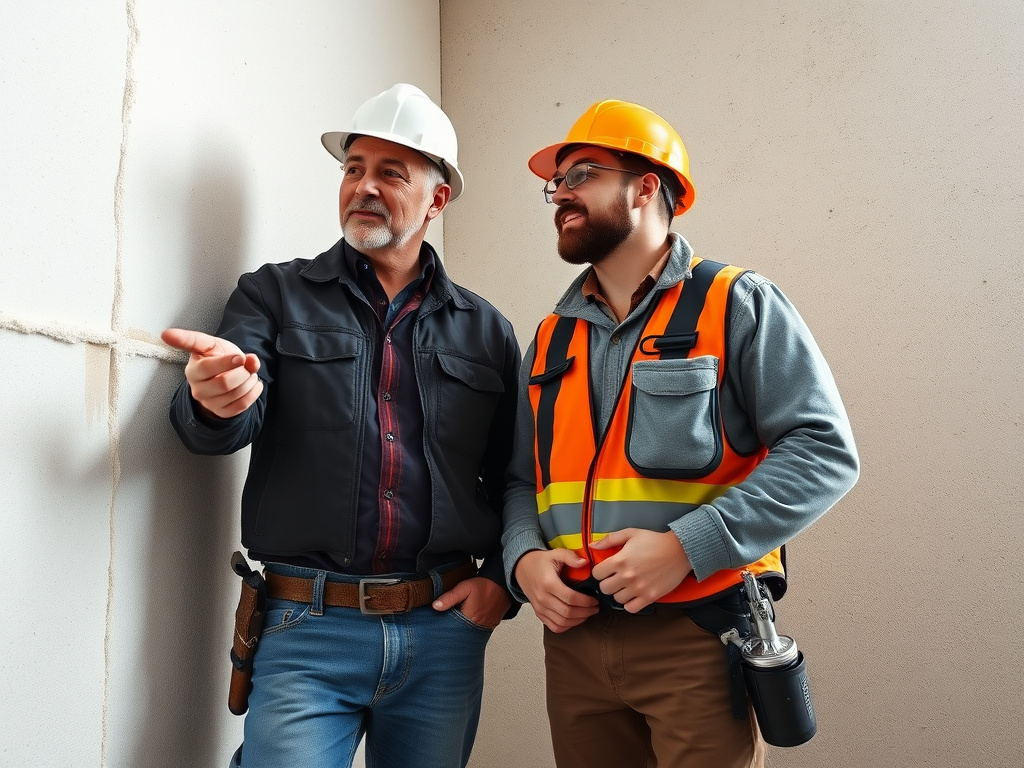
Four things we look at on a ride-along
Crew process & pacing
How the crew moves through a job — setup, spray sequence, cleanup — and where time or material is being lost to a process problem rather than a people problem.
Equipment & rig setup
Proportioner settings, hose runs, and rig organization, looked at through the lens of someone who's run the same equipment on real jobs, not just read the manual.
Quality control in practice
Whether the quality checks you think are happening are actually happening — thickness, coverage, adhesion — and what a gap between the two is costing you in callbacks.
Practical, next-job fixes
The goal isn't a theoretical report — it's specific changes your crew can apply on the very next job, explained in terms that make sense on a job site.

A specific list, not a vague impression.
A ride-along typically wraps with a straightforward conversation — what's working, what isn't, and two or three specific changes worth making first. If you're also in monthly coaching, we'll follow up on whether they actually got implemented.
- In-person or video, depending on location and scope
- Scoped to a single job or a broader look at multiple crews
- Pairs well with ongoing monthly coaching for follow-through
Job-site consulting questions, answered
Both, because on a real job site the two are tangled together — how the crew moves, how much material gets wasted, how quality control happens (or doesn't) all show up as business outcomes. The visit covers whatever's actually relevant to your crew and job.
Either, depending on location and scope. Some engagements are an in-person visit to an active job site; others work well over video with you walking the phone or a call around the site in real time.
Manufacturer training is generally about the equipment and the material. A ride-along looks at the whole operation on a live job — crew process, pacing, waste, quality control, and the business decisions behind them — from someone who's run crews, not just trained on a machine.
It can be either. Some mentees use a single ride-along to get an outside read on a specific problem; others build it into an ongoing mentorship alongside monthly coaching.
Get an experienced second opinion on your crew
Tell us about your operation and we'll talk through whether a job-site visit or a video walk-around makes more sense.